
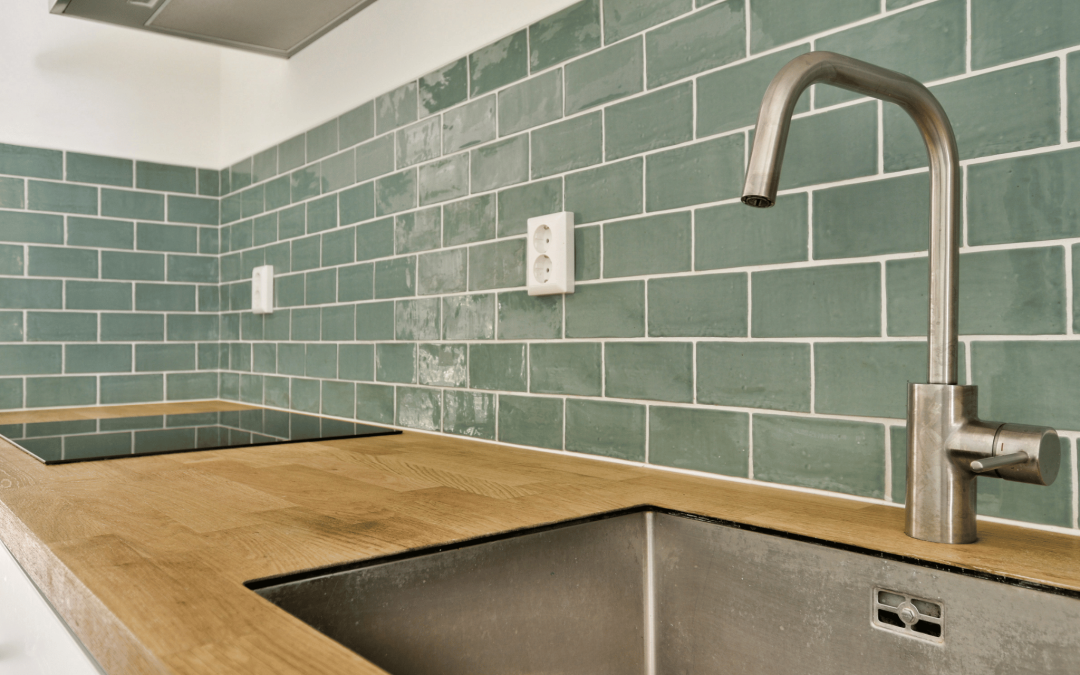
When designing or renovating a small room every detail matters, especially your choice of tile layout. The right tile pattern can transform a compact space, creating the illusion of openness and depth. In homes, where maximizing every square foot is often essential, tile layout becomes an art form that balances function, beauty, and comfort.
Here, we will discuss the most suitable tile patterns and useful suggestions that would help to make your small area look larger, brighter, and more welcoming.
Understanding the Power of Tile Layouts
It is wise to know the reason why tiles make a room seem big or small before going into specific layouts. Tiles serve as a visual guide; it is natural and has to attract attention due to its size, colour, and direction. You can create more or less space by playing with these elements.
At home, regardless of whether it is a downtown condo or a rustic cabin, the correct tile pattern will help a small bathroom, kitchen or entryway to seem spacious.
Go Big with Large-Format Tiles
Why Larger Tiles Work
Large-format tiles are one of the best methods of expanding the size of a small room. Large tiles imply a smaller number of grout lines, which leads to the creation of a smooth and continuous surface. This absence of visual discontinuity gives the impression of flow that deceives the eye to believe that there is more space.
Tiles with a size of 12 x 24 inches or more are marvels in a smaller bathroom or kitchen. Soft greys, whites or beige items that are light coloured tiles are those that reflect natural light well, a major plus since the days in the winter months are few.
Pro Tip
Apply grout which is similar to the colour of tiles. The less the difference between the grout and tile the smoother and more open the flooring will be.
Diagonal Tile Layouts: A Classic Trick
Creating Movement and Depth
A diagonal design with tiles being placed at 45-degree angle creates attention in the room and not on one side of the wall to another. This slight shift creates the impression of greater width and depth
The method is especially effective in the square or narrow rooms, where straight lines may help bring the walls closer. The floor is visually broken in the diagonal pattern which makes the floor look dynamic and open.
Canadian Design Insight
Diagonal layouts are also particularly useful in older houses with character-filled areas, which are not necessarily straight-walled. The angled design supplies to cover the uneven lines giving a smooth and contemporary finish.
Herringbone and Chevron Patterns for Visual Interest
Elegant and Expansive
The use of Herringbone and chevron tile designs also add sophistication and movement to small rooms. Their zigzag arrangement leads the eye at a Diagon to the floor, which adds to the sense of space.
A herringbone pattern uses rectangular tiles arranged in V-like pattern whereas a chevron pattern uses angled edges to create a flowing arrow pattern. The two designs are very effective in kitchens, halls and bathrooms.
Tip for Canadian Homes
Use a herringbone pattern with wood-like porcelain tiles in light colours to create a traditional and natural image – ideal in the creation of a warm but open atmosphere which is appropriate for cooler climate.
Continuous Flow from Floor to Wall
Blurring Boundaries
Carrying the same tile up onto one or more walls, carried down on the floor, is one of the tricks of design which contributes to spaciousness. This results in a smooth continuity that eradicates physical barriers, which makes the room appear to be one and airy.
This method is extremely effective in showers, powder rooms or laundry areas where a unified design can turn a small area into a spa-like retreat.
Choose Reflective and Light-Toned Tiles
Brighten and Enlarge
Light and reflective floors e.g., polished porcelain or glossy ceramic will reflect light around the room, creating the illusion of a large room. This effect is further increased by matching these tiles with a lot of lighting (natural or artificial).
During the dark winter months, the brightness in a small area can be maximised which can make the small space seem bigger and brighter.
Keep Grout Lines Minimal
Grout may augment or inhibit the illusion of space. The grout lines can be wide or dark, and they will physically divide the surface, thus making it look smaller. To allow space, narrow grout joints are to be used, and a grout shade that is close to your tile colour is to be chosen.
This is very effective in the application of the floor and wall and a clean continuous appearance is achieved.
To give the impression of space in a small room, one doesn’t need to tear down walls. All one needs is to be smart about design. Diagonal and herringbone patterns, along with large, light-reflective tiles, can all bring depth and openness to a space in different ways